
Through a new series of interviews, ‘Makers at Work’ celebrates Scotland as a place of making, capturing a diversity of disciplines, practices and making spaces.
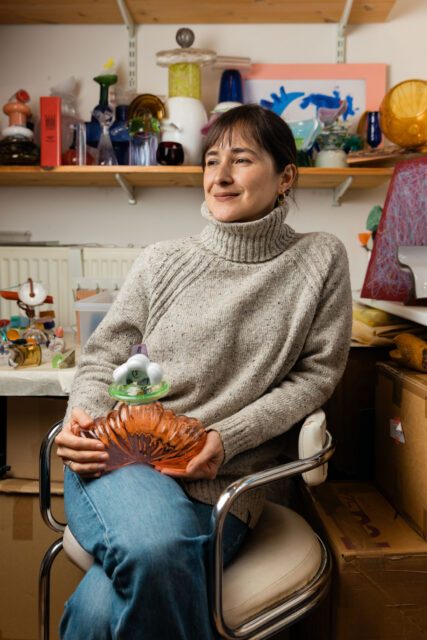
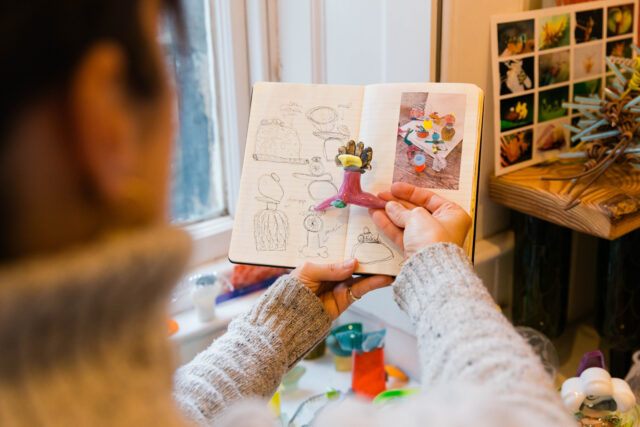
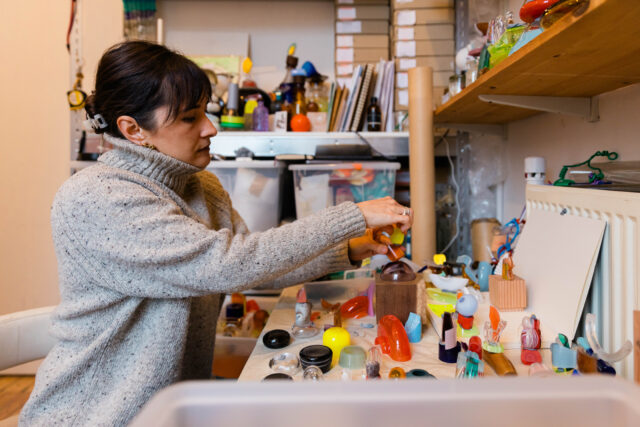
We visited Juli Bolaños-Durman at her studio in Edinburgh and chatted about her practice as a glass artist and designer, her experience of learning craft at school, and the challenges and joys of making in Scotland.
How did you get started working in your craft?
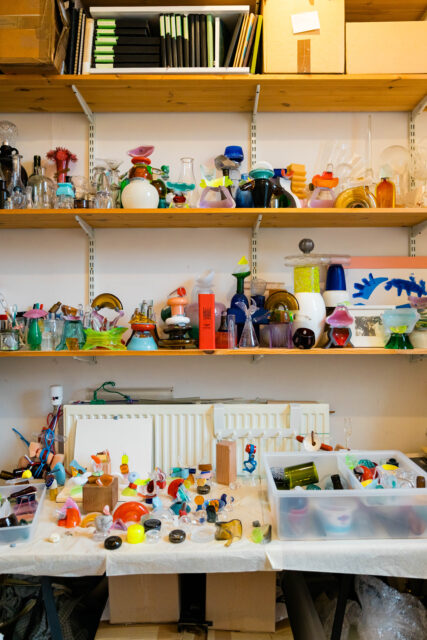
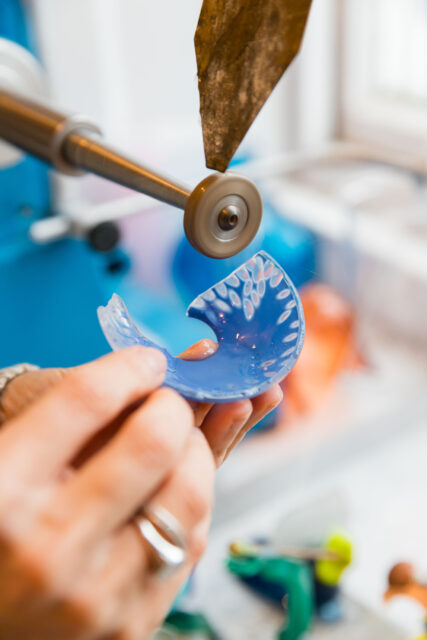
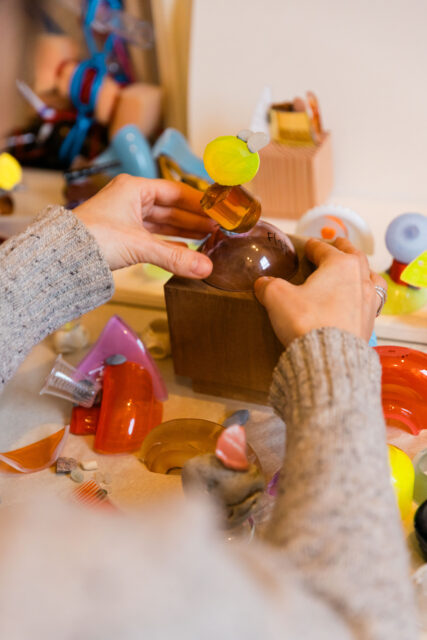
I’ve known I was an artist since I was a child. However, it was during a six-month mixed media course at The Art Student’s League of New York that I realized the potential and inspiration I found in waste material. Soon after, I applied to and was accepted for the MFA in Glass at Edinburgh College of Art, where I discovered my love for mending and re-imagining broken glass into something precious.
What was your experience of craft education in school?
Growing up in Costa Rica, formal craft education was minimal, aside from basic art classes. My pursuit of craft was driven by actively seeking extra classes outside of school with the support of my parents. In Costa Rica, art and making are often perceived as having little value, with the emphasis placed on studying practical subjects that lead to an easy job in the future.
What is most challenging, and most enjoyable about your practice?
The most challenging part of my practice is integrating the mindset of a business person. We must create immaculate work with strong conceptual rigor while also being adept at strategy, managing cash flow, and building a robust business. To ensure the studio’s longevity, artists and designers must be adaptable, resourceful, and focused on the big picture.
The most enjoyable part is being able to create something with our hands, of value, much like our ancestors did to survive. Making connects us to what makes us human, especially now, when we experience so much of the world through screens. The joy my work brings me is fuel and a connection to an unlimited life force.
What would improve your life as a maker or what support do you think is missing?
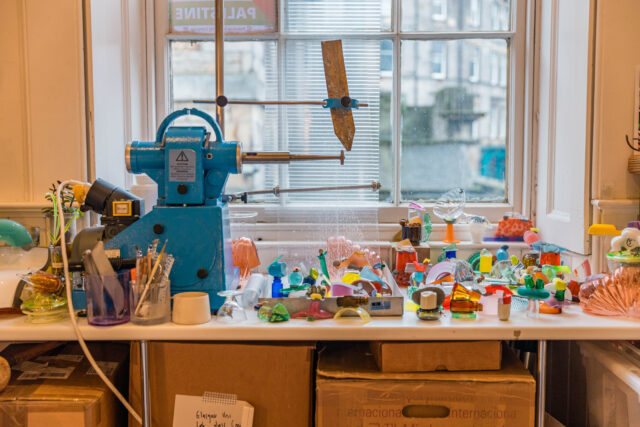
A key improvement would be to foster a stronger, more supportive community that encourages lateral thinking for problem-solving. This would be a space where any artist could seek help, ask questions, and collaboratively find solutions. No one exists in a vacuum; the wider the community of support, the more Scotland as a whole will thrive.
How do you view Scotland as a place for making, selling, exhibiting and celebrating craft?
I feel Scotland is currently going through a very exciting change. Slowly but surely, Scottish craft is being highlighted more and more on a larger world stage as a strong contender of powerful designers and makers, characterised by ingenuity and the use of heritage traditions. It has changed significantly even since I graduated ten years ago. I feel hopeful due to the strong efforts of various organisations, curators, and writers. From my experience, we are greatly supported by the Scottish generosity of spirit and a collaborative outlook toward making great, enduring work.
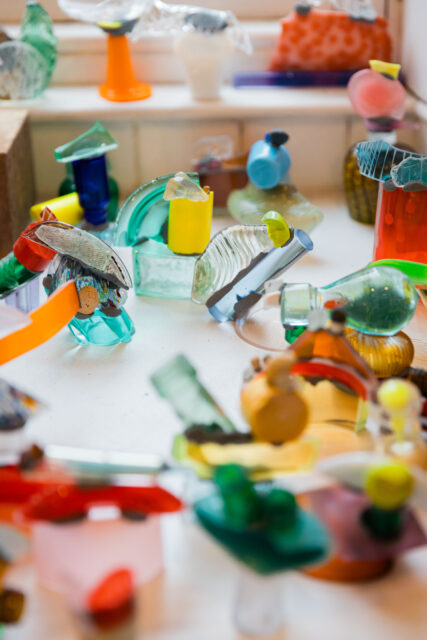
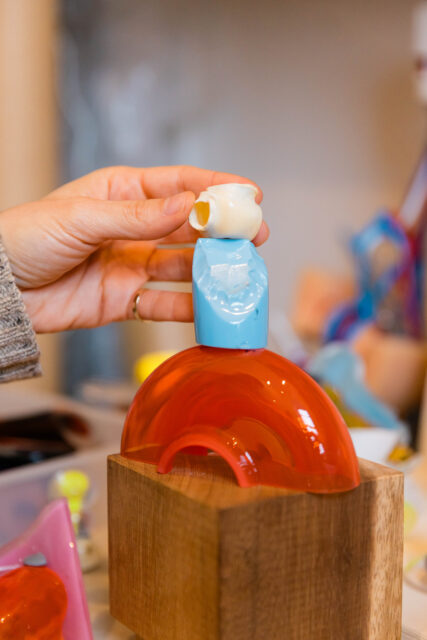
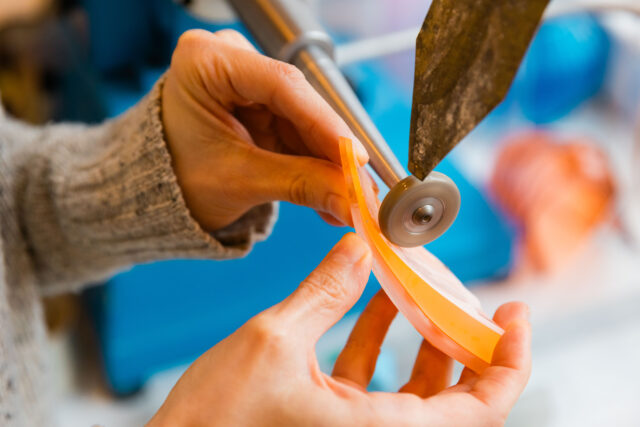
Juli Bolaños-Durman is a Costa Rican glass artist and designer based in Edinburgh, Scotland. Originally trained in graphic design, she moved to Scotland in 2011 to complete an MFA in Glass at Edinburgh College of Art, where she developed her distinctive approach to working with recycled and found glass. Her practice celebrates the beauty of imperfection, applying heritage cold-working techniques to discarded objects and giving them renewed purpose and life.